

Compliance training is one of the most essential training programs every organisation must deliver, yet it’s also one of the most misunderstood. Regardless of your role, such as HR, L&D, safety, or leadership, compliance training helps ensure your business follows laws, regulations, and internal policies, while protecting your employees and reducing operational risks.
This beginner’s guide explains everything you need to know: what compliance training is, why it matters, examples, types, benefits, and how to deliver it effectively.
What is Compliance Training?
Compliance training can be defined as a mandated, structured, and formalized way to educate employees about laws, regulations, standards, and internal policies that apply to their everyday jobs. Every company, regardless of size, industry, or geography, has the responsibility to ensure that its employees understand the rules they must follow. Compliance training provides employees with information in a way that provides uniformity, consistency, and protects both the organisation and its employees.
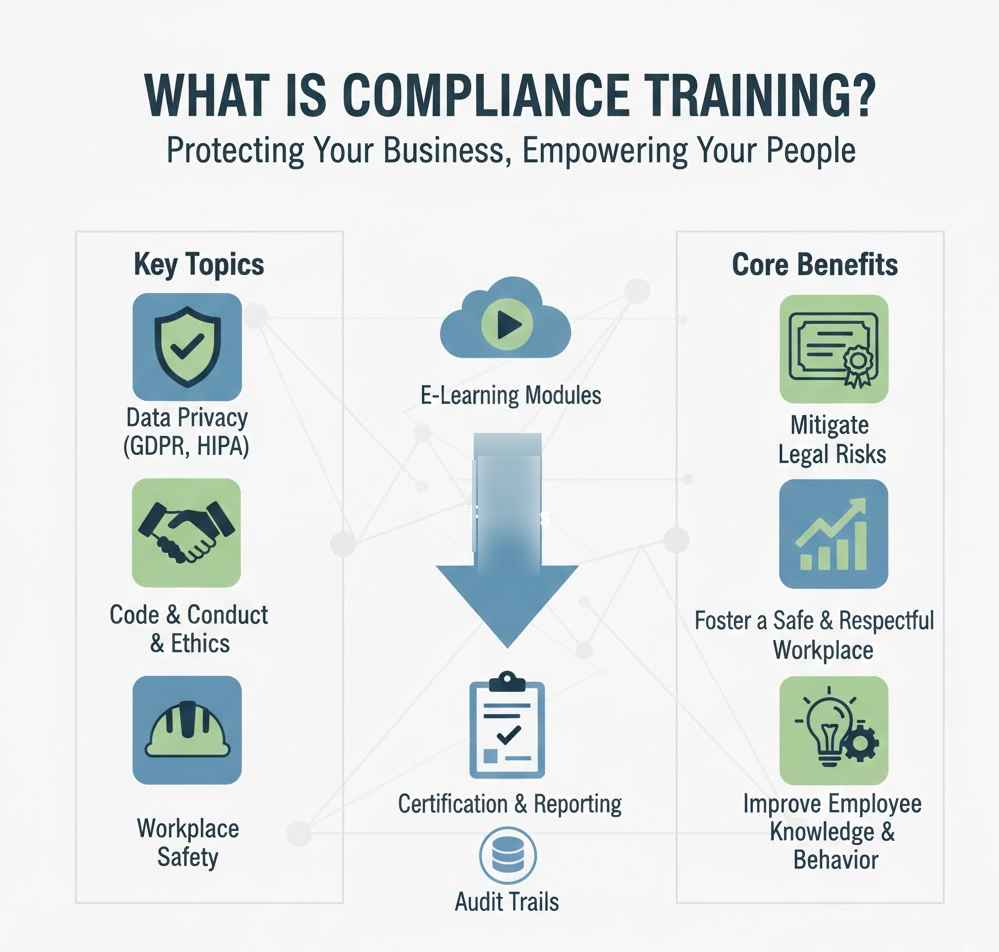
At its core, compliance training helps employees understand what they must do, why it matters, and how to apply the rules in real situations. This includes everything from workplace safety and data protection to ethical behaviour and anti-harassment practices. When done well, it goes beyond just sharing information; it shapes employee behaviour, reduces organisational risk, and fosters a culture of accountability.
The Purpose of Compliance Training
The primary purpose of compliance training is to ensure that your organisation operates in a safe, efficient, and ethical manner within the framework of the law. The following is a brief overview of what compliance training allows you to accomplish:
1. Maintain Legal Compliance for your Organisation
Every industry has certain legislative mandates, regulatory bodies, and requirements such as workplace safety regulations, data privacy, anti-discrimination laws, certification for being an industry leader, etc.
2. Reduce Risks and Liabilities
Human error is one of the biggest causes of compliance failures. Lack of awareness, poor decision-making, or outdated knowledge can lead to accidents, data breaches, misconduct, or operational breakdowns.
Compliance training reduces these risks by ensuring:
- Employees know what is expected
- Teams understand how to avoid violations
- Managers know how to detect and respond to issues early
- The organisation protects itself from costly legal liabilities
With the right training, companies can significantly reduce incidents, claims, and reputational damage.
3. Create a Safe, Ethical, and Responsible Workplace
Compliance training isn’t only about laws, it’s also about culture. Employees are more likely to act responsibly when they understand:
- How to treat colleagues with respect
- How to identify and report misconduct
- How to follow ethical decision-making processes
- What counts as unacceptable behaviour
- How to perform their duties safely and responsibly
A strong compliance program supports a positive work environment where employees feel safe, valued, and protected.
Compliance Training Is Often a Legal Requirement
In many industries, such as healthcare, finance, manufacturing, logistics, government, food safety, or education, compliance training is not optional. Regulators require organisations to:
- Provide mandatory training
- Keep records of completion
- Offer refresher training annually or periodically
- Use approved or updated content
- Prove compliance during audits
Failing to provide proper compliance training can result in serious legal consequences, including penalties, suspension, lawsuits, or loss of operating licenses.
Even in industries where compliance training is not mandated by law, it is still considered best practice for reducing risk and protecting employees.
Why Is Compliance Training Important?
Compliance training matters because it protects both your business and your people.
Here’s what it helps you avoid:
- Legal penalties and fines
- Safety incidents or injuries
- Data breaches and cybersecurity risks
- Reputational damage
- Employee misconduct or harassment
- Operational disruptions
A strong compliance training program builds trust, improves workplace culture, and ensures everyone understands their responsibilities.
Who Needs Compliance Training?
Compliance training isn’t limited to a specific role or department; every organisation and every employee needs it at some level. The goal is to ensure that everyone who contributes to your business understands the rules, responsibilities, and safety standards that apply to their work.
Here’s a simple breakdown of who needs compliance training:
1. New Employees
Every new hire should complete compliance training as part of their onboarding process. This ensures they start their role with the right knowledge of workplace policies, safety rules, and expected behaviour.
2. All Employees (Annual or Periodic Training)
Most organisations require all staff to complete mandatory compliance courses every year. This helps refresh their knowledge and ensures they stay updated on any changes in laws or internal policies.
3. Managers and Team Leaders
Leaders often need additional or advanced compliance training, as they are responsible for enforcing policies, handling incidents, and ensuring their teams follow regulatory standards.
4. Remote and Hybrid Employees
Remote workers still need to follow company policies, especially around data security, cybersecurity, confidentiality, and proper use of digital tools.
5. Contractors, Vendors, and External Partners
Depending on the industry, non-employees who access your systems, data, or facilities may also require compliance training to ensure they meet the same safety and ethical standards as internal staff.
6. Highly Regulated Industries
Some sectors have strict legal requirements for compliance training. Industries that typically require more rigorous and frequent training include:
- Healthcare
- Finance and banking
- Manufacturing and construction
- Logistics and transportation
- Education and child safety
- Government and public services
In these industries, compliance training is not just recommended; it is mandatory, heavily regulated, and audited regularly.

Types of Compliance Training
| Type of Compliance Training | What It Covers / Purpose |
|---|---|
| 1. Workplace Health & Safety (WHS / OSHA) | Hazard identification, safe work practices, PPE usage, emergency procedures, and creating a safe workplace environment. |
| 2. Data Privacy & Cybersecurity | GDPR, HIPAA, data handling rules, phishing awareness, password hygiene, secure device usage, and preventing cyber threats. |
| 3. Anti-Harassment & Anti-Discrimination | Preventing workplace harassment, promoting an inclusive culture, understanding acceptable behavior, and following anti-discrimination laws. |
| 4. Code of Conduct & Ethics | Ethical decision-making, professional behavior, company values, integrity, transparency, and reporting unethical activities. |
| 5. Industry-Specific Compliance | Training tailored to specific sectors such as: • Financial compliance (AML, KYC) • Healthcare regulations • Aviation safety • Food safety & hygiene • RTO compliance (Australia) |
| 6. Environmental Compliance | Sustainability policies, waste management, environmental regulations, and reducing environmental risks or violations. |
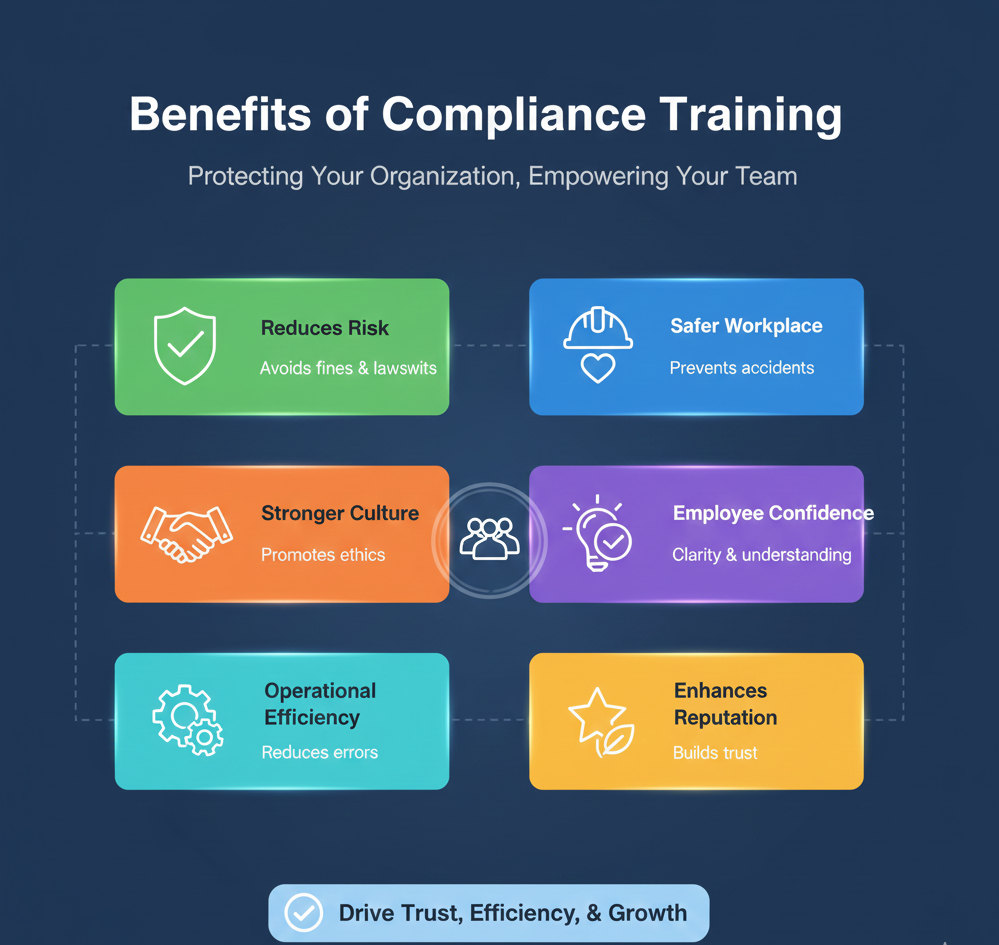
Benefits of Compliance Training
A well-designed compliance program delivers both short-term and long-term value:
How to Deliver Compliance Training Effectively with BrainCert
Compliance training is not solely about fulfilling legal obligations anymore; instead, organisations should focus on establishing a safe, ethical, and efficient work environment. To create an environment that fosters these qualities, organisations will require a systematic approach to training, accompanied by the tools and technology that enable them to meet their compliance needs. This should be facilitated by a learning management system (LMS) specifically designedfor that purpose.
BrainCert offers the solution here.
This section provides a step-by-step description of how to use BrainCert to deliver effective compliance training, as well as outlining some of the features of BrainCert that make it an excellent choice for organisations operating in regulated industries.
1. Use an LMS Designed for Compliance (BrainCert Makes It Easy)
Compliance training demands accuracy, consistency, and strong reporting. BrainCert simplifies every step with built-in compliance tools, including:
Automated Training Assignments
Assign mandatory courses to individuals, teams, or entire departments automatically, perfect for onboarding, annual training, or role-based compliance.
Certification & Recertification Management
Create digital certificates, which are ideal for industries with strict licensing requirements (e.g., healthcare, aviation, finance).
Reporting & Analytics Dashboards
BrainCert provides accurate, real-time records of completions, attempts, scores, and certifications.
Generate detailed audit trails and compliance reports instantly, saving time during inspections or audits.
Role-Based Access Control (RBAC)
Limit access to sensitive compliance content and ensure only authorized personnel can view or manage training.
2. Make Compliance Training Engaging (BrainCert’s Learning Experience Tools)
BrainCert helps break the “checkbox training” mindset through immersive learning formats:
Interactive Course Authoring Tools
Add videos, PDFs, audio files, assessments, HTML5 content, SCORM, or virtual classroom sessions.
Virtual Classroom for Live Compliance Workshops
Host instructor-led compliance sessions with features like:
- Whiteboards
- Breakout rooms
- Hand-raise tools
- Polls and live quizzes
Gamification
Use badges, points, and leaderboards to motivate users and increase completion rates.
3. Keep Content Updated
Regulations evolve constantly, and so should your training. BrainCert makes updates fast and seamless:
Update a lesson once, and BrainCert automatically pushes changes to all relevant courses.
Use AI-powered course creator tools to quickly generate or update compliance modules when new regulations appear.
4. Use Microlearning for Faster Retention
Short, focused lessons help learners retain information better. BrainCert supports microlearning with:
Bite-Sized Learning Modules
Deliver quick lessons that employees can complete between tasks.
Mobile Learning
With BrainCert’s mobile application, learners can complete training anywhere, in field environments, remote locations, or on the go.
Learning Paths
Organize micro-modules into clear, progressive paths that guide employees step by step through required compliance topics.
5. Test Knowledge to Ensure Understanding
Assessments and skill checks ensure that compliance training isn’t just completed, but understood.
BrainCert offers:
Quizzes, Tests & Assignments
Design high-quality assessments with multiple question types, including scenario-based and simulation-style items.
Automated Grading
Save time while ensuring consistent evaluation.
Secure Browser & Anti-Cheating Tools
Maintain integrity in compliance assessments, especially for regulated industries.
6. Provide Reinforcement Throughout the Year
Compliance isn’t a once-a-year activity, BrainCert helps you maintain continuous learning.
Refresher Courses
Schedule periodic refreshers to keep compliance knowledge top of mind.
Drip Content Delivery
Release content gradually to reinforce learning over time.
On-the-Spot Micro Assessments
Send short quizzes occasionally to reinforce important policies or new rules.
Common Challenges in Compliance Training (and How BrainCert Solves Them)
| Challenge | How BrainCert Solves It |
|---|---|
| Low engagement | Interactive content, gamification, microlearning |
| Outdated content | Easy content updates, AI content generator, version control |
| Difficulty tracking completion | Dashboard analytics, completion tracking, smart reminders |
| Manual processes | Automation workflows, auto-enrollments, certification tracking |
| Lack of real-world relevance | Scenarios, case studies, multimedia authoring |
| Complex regulations | Industry-specific templates, detailed reporting, audit trails |
BrainCert eliminates complexity and ensures compliance training runs smoothly and efficiently.
Conclusion
Compliance training isn’t just a legal requirement; it’s a foundation for a safer, more ethical, and more productive workplace. When delivered effectively through a modern LMS, it protects your organisation, builds a culture of trust, and ensures every employee knows how to do their job responsibly.
BrainCert doesn’t just help you deliver compliance training.
It helps you deliver it smarter, faster, and more confidently.